

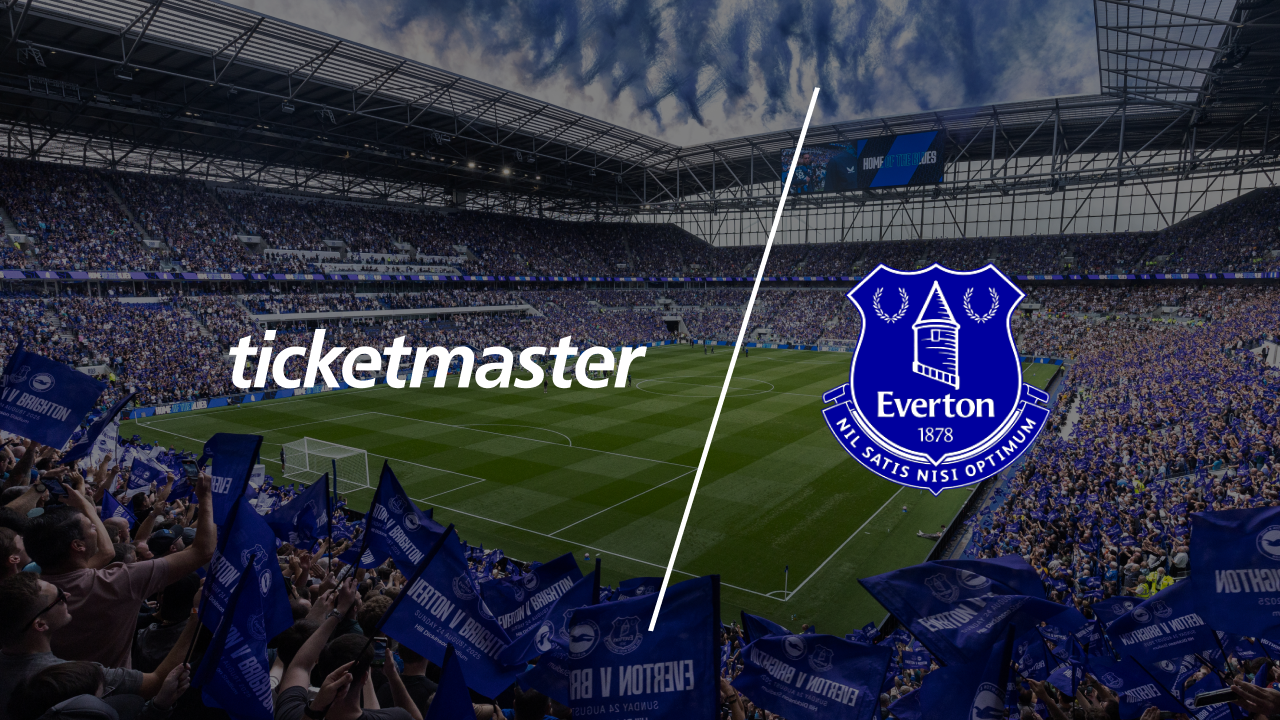
When Iliman Ndiaye struck the first Premier League goal at Hill Dickinson Stadium on 24 August 2025, it marked a new and exciting era for Everton Football Club. A significant moment in the club’s already storied history, it is one that will long be remembered by those who were there to witness it.
But sharing this moment with fans was years in planning, with Everton and Ticketmaster teams working hard to ensure the 52,769-capacity waterfront stadium felt just as homely as Goodison Park, where the Blues spent 133 years. Drawing on experience supporting major venue transitions, including Tottenham Hotspur and Arsenal, Ticketmaster Sport worked closely with Everton to prepare for this once-in-a-generation shift.
One of the biggest milestones in the stadium move was successfully transitioning 30,000 season ticket holders — many of whom had sat in the same seats at Goodison Park for decades. The club knows its supporters better than anyone and used smart segmentation to prioritise long-standing fans and keep the process clear and fair.
The result was a smooth, carefully managed transition — turning what could have felt like a daunting change into a confident, positive step into a new era for the club and its supporters.
Managing demand at a historic moment
Everton’s final Premier League fixture at Goodison Park, against Southampton in May 2025, brought unprecedented demand. The club prioritised security to ensure genuine fans gained access to tickets, including the implementation of a “fan-first” ballot process to give everyone a chance of being there. As Everton’s Head of Ticketing Lee Newman explains: “Given the historic significance and unprecedented demand for that fixture, the ballot system ensured a controlled, transparent, and fair allocation process.”
Alongside the challenge of wrapping up men’s team operations at Goodison, Everton were managing ticketing operations in a brand-new venue. With early planning, phased implementation and close collaboration between the club, Ticketmaster and technical partners, this went smoothly. New stadium infrastructure was fully integrated with Ticketmaster’s systems, with extensive testing, simulations and three test events ensuring readiness from day one.
A digital-first matchday
The stadium move also marked a shift to digital-first access, with high-speed ticket scanners and mobile tickets introduced to improve entry flow and fan engagement. Flow rates are increasing on a match-by-match basis as supporters become familiar with their new home, and queues at turnstiles are reduced from Goodison Park.
Digital change requires careful management, with Everton placing significant focus on clear, fan-friendly communications, video tutorials and on-site assistance. Test events offered supporters the opportunity to trial and experience a new way of entering the stadium long before the turnstiles opened for that first full-capacity Premier League fixture against Brighton and Hove Albion. Alternative access options, including paper tickets, remained available, primarily for older fans and those with accessibility requirements.
Building a smarter future
The depth of insight now available to the club has had a transformative impact on decision-making. “The ability for live data on fan interactions through digital touchpoints means we now know far more than we ever did at Goodison,” Newman explains. Real-time dashboards, post-match surveys and qualitative feedback are already shaping matchday operations and commercial performance, and as Newman notes, “emerging trends are feeding directly into longer-term investment and experience strategies.”
Everton’s transition shows that a stadium move does not have to be a disruptive hurdle. With the right data, technology and partnership in place, it can be smooth, secure and supporter-focused – and lay the foundations for a smarter, more connected future.


